
In my 40+ years of engineering, I have seen the "startup" model evolve from the garage-based teams of the 1980s to the massive, venture-backed organizations of the 2010s. But as we sit in 2026, we are witnessing the most radical shift yet: the rise of the AI-Native Startup.
Many entrepreneurs are now chasing the dream of the "1-human $1B enterprise." The logic is seductive: if AI can handle the coding, the marketing, the customer support, and the administrative tasks, then a single founder can maintain absolute control and 100% equity while scaling to global proportions.
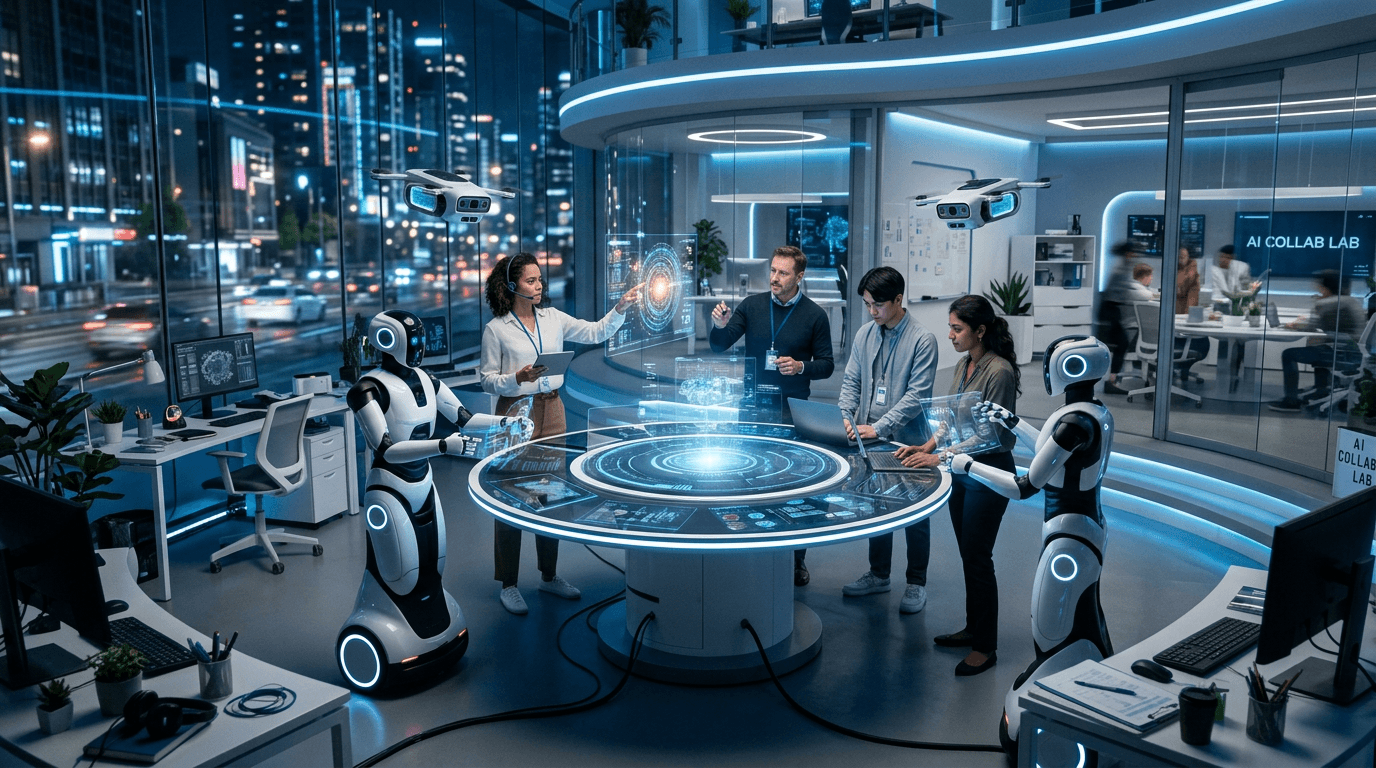
It is a beautiful vision. But as a practitioner, I want to point out the nuance that the "hype" often misses. Running a successful enterprise on AI isn't about replacing humans—it's about Human-AI Synergy.
The Simulation vs. Creativity Gap
The most dangerous assumption a founder can make in 2026 is that AI has "solved" creativity.
AI agents are master simulators. They can analyze a billion data points, identify patterns, and generate high-fidelity outputs that look creative. They can write a poem, design a logo, or draft a marketing strategy that is indistinguishable from human work at first glance.
But AI agents solve for probability, not originality. They are backward-looking by nature, trained on what has already been done. They can simulate creativity, but they cannot truly achieve it without human assistance.
True value generation in a crowded market still requires the human spark:
- The Identification of Unmet Needs: AI can see a "gap" in data, but it cannot feel the "pain" of a customer. Creativity starts with empathy—a uniquely human trait.
- The "Non-Obvious" Pivot: AI is great at optimization. Humans are great at the "left-field" decision that defies the current data because of a hunch or a cultural insight.
- The Moral and Aesthetic Compass: AI has no taste. It has no values. The "soul" of a billion-dollar brand comes from the human founder's vision of what the world should look like, not just what the data says it will look like.
Scaling the Operation, Protecting the Moat
In the 1-human billion dollar company, the AI agents are your operational engine. They are there to accelerate everything that is repeatable, standardized, and labor-intensive.
But your moat—the reason your company is worth $1B and not $0—is the human creativity you pour into it.
If you use AI to replace your creative process, you are effectively commoditizing your own business. You are building a company that any other person with the same AI tools can replicate.
Instead, the blueprint for 2026 is to use AI to free up your human creativity.
- Let the agents handle the 2,000-line refactor while you spend the afternoon talking to customers.
- Let the agents manage the multi-channel ad spend while you think about the underlying narrative of your brand.
- Let the agents run the Rigid Management Layer while you focus on the Human-in-the-Loop decisions that define your unique value.
The Synergy Mandate
The most successful startups of 2026 won't be the ones with the most agents. They will be the ones that have mastered the synergy between human intuition and machine execution.
Don't build a 1-human company to prove you don't need people. Build it to prove that when a human is empowered by a fleet of AI agents, they can finally focus on the one thing machines can't simulate: The future.
John K. Johansen is a Venture Architect and VP of Software Engineering who has spent 40+ years building and governing high-scale systems.